Electronic Dance Music isn't just a genre—it's an entire universe of sound. From the soulful rhythms of Chicago house to the bone-rattling bass of dubstep, EDM encompasses decades of innovation, cultural movements, and technological evolution.
This guide breaks down the essential genres you need to know, how they connect, and where to experience them.
01.The Origins: How Electronic Music Began
The Twin Cities: Chicago & Detroit (1980-1985)
Electronic dance music as we know it emerged from two American cities during economic decline:
Chicago - House Music (1977-1985)- The Warehouse: Gay Black club where Frankie Knuckles played disco, soul, and European electronic
- When disco "died" in 1979: DJs started creating new tracks with drum machines and synthesizers
- Result: House music—named after the Warehouse itself
- Cultural context: Created by marginalized Black and LGBTQ+ communities as an act of creative resilience
- The Belleville Three: Juan Atkins, Derrick May, Kevin Saunderson (three Black teenagers from Detroit suburbs)
- Influences: Kraftwerk's futurism + Parliament-Funkadelic's funk + Detroit's industrial landscape
- Result: Techno—mechanical, hypnotic, deeply soulful
- Philosophy: Exploring humanity's relationship with machines and automation
The UK Rave Explosion (1987-1992)
1987: The Second Summer of Love- Acid house arrives from Ibiza to UK warehouses
- Illegal outdoor raves attract tens of thousands
- Government criminalizes "music characterized by repetitive beats" (Criminal Justice Act 1994)
- Scene goes underground and spreads globally
Legacy: This underground resistance culture created the foundation for modern rave values (P.L.U.R.) and festival culture.
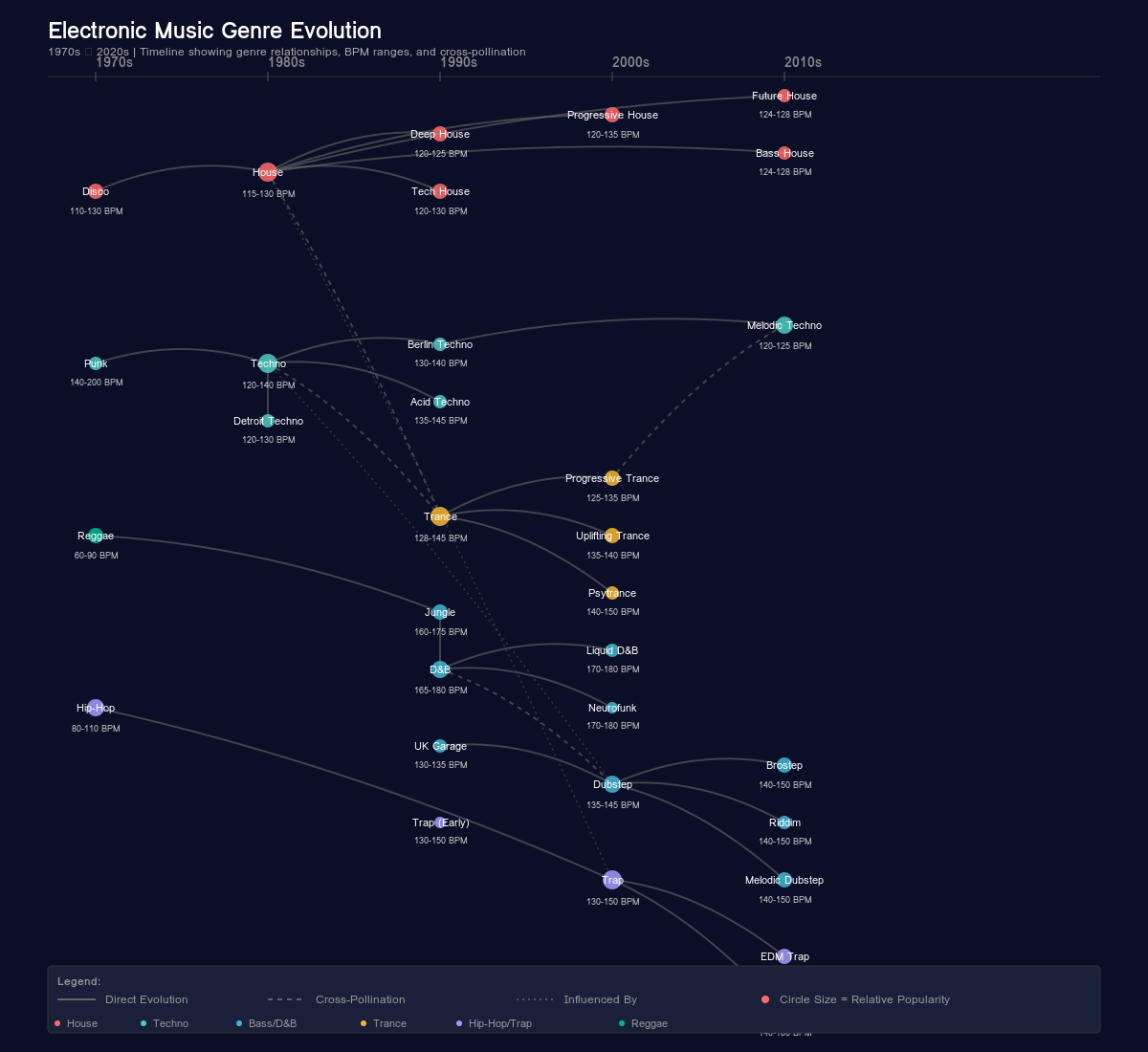
02.The Genre Family Tree
Understanding how genres evolved helps you explore new sounds:
03.House: The Foundation (120-130 BPM)
Core DNA
- Four-on-the-floor: Steady kick drum on every beat
- Structure: 16-32 bar phrases with builds and releases
- Vibe: Soulful, groovy, made for dancing
- Origin: Chicago, 1980s (Frankie Knuckles, Larry Heard, Marshall Jefferson)
Essential Subgenres
Deep House (118-125 BPM)- Slower, jazzier, more sophisticated
- Vibe: Sunset beach clubs, intimate venues
- Artists: Larry Heard, Kerri Chandler, Disclosure, Duke Dumont
- Where: Ibiza beach clubs, underground rooms
- Minimal, rhythm-focused, groovy
- Fusion of house's soul + techno's drive
- Artists: Green Velvet, Chris Lake, Fisher, CamelPhat
- Where: Festival techno stages, club main rooms
- Long builds, emotional journeys, 8+ minute tracks
- Artists: Deadmau5, Eric Prydz, Sasha, John Digweed
- Where: Extended DJ sets, listening experiences
- Bouncy basslines, metallic synths, modern polish
- Artists: Tchami, Oliver Heldens, Don Diablo
- Where: Mainstage festivals, EDM clubs
- House structure + dubstep-style wobbly bass
- Artists: Jauz, Joyryde, AC Slater
- Where: Bass-focused festival stages
Festival Stages
- EDC: stereoBLOOM, cosmicMEADOW (tech house)
- Ultra Miami: Main Stage, Live Stage
- Tomorrowland: The Rose Garden, Freedom Stage
04.Techno: Machine Soul (130-150 BPM)
Core DNA
- Hypnotic repetition: Minimal changes over long periods
- Machine aesthetic: Synthetic, industrial sounds
- Purpose: Built for marathon DJ sets in dark clubs
- Origin: Detroit, 1985 (Juan Atkins, Derrick May, Kevin Saunderson)
Evolution Path
Detroit Techno (1985-1995)- The original: futuristic yet soulful
- Essential: "Strings of Life" (Derrick May, 1987)
- Vibe: Emotional machine music
- Harder, darker, more industrial
- Born in abandoned buildings after Berlin Wall fell
- Venues: Berghain, Tresor, Watergate
- Artists: Ben Klock, Marcel Dettmann, Ellen Allien
- Vibe: Serious, ritualistic, 12+ hour sets
- Techno rhythm + emotional melodies
- Often features ethnic instruments (Middle Eastern, African)
- Artists: Tale of Us, Anyma, Maceo Plex, Artbat
- Where: Festival peak-time slots
- Roland TB-303's distinctive "squelch"
- Hypnotic, psychedelic, repetitive
- Artists: Hardfloor, Josh Wink, Chris Liberator
Festival Stages
- EDC: neonGARDEN (Factory 93)
- Movement Detroit: All stages (techno-focused festival)
- Awakenings: Netherlands techno institution
05.Trance: Emotional Journeys (138-145 BPM)
Core DNA
- Purpose: Inducing trance-like emotional states
- Structure: Long build-ups → euphoric breakdowns → massive climax
- Melodies: Prominent, soaring, ethereal
- Origin: Germany, early 1990s
Major Styles
Progressive Trance- Gradual evolution over 8-10 minutes
- Subtle, layered
- Artists: Sasha, BT, Above & Beyond
- Classic: "Children" - Robert Miles (1995)
- Peak euphoria, hands-in-the-air moments
- Major key melodies, emotional vocals
- Artists: Armin van Buuren (A State of Trance), Above & Beyond, Aly & Fila, Ferry Corsten
- Where: Dreamstate events, Luminosity Beach Festival
- Fast, complex, psychedelic
- Born in Goa, India beach parties
- Minimal vocals, maximum layers
- Subgenres: Goa (spiritual), Full-On (powerful), Dark Psy (aggressive)
- Artists: Infected Mushroom, Vini Vici, Astrix
- Where: Boom Festival (Portugal), Ozora (Hungary)
Festival Stages
- EDC: quantumVALLEY (Dreamstate)
- Tomorrowland: Psy-Trance stage, Mainstage (uplifting)
- Dreamstate: Entire festival
06.Bass Music: Dubstep, Drum & Bass, Future Bass
Dubstep (140 BPM)
Origins: South London (2002-2005)- Born from UK garage slowed down
- Deep sub-bass, minimal, dark
- Pioneers: Skream, Benga, Burial, Digital Mystikz
- Venues: FWD>> club night, Plastic People
- Skrillex's "Scary Monsters and Nice Sprites" (2010) changed everything
- "Brostep": Aggressive mid-range, robotic sounds, festival-oriented
- UK fans rejected it; Americans embraced it
- Artists: Skrillex, Excision, Zomboy, Knife Party
- Riddim (2010s-Present)
- Melodic Dubstep (2012-Present)
Drum & Bass (170-175 BPM)
Origins: UK Jungle (1992-1997)- Sped-up breakbeats from funk/jazz records
- Reggae influence, MC culture
- Pioneers: Goldie, Roni Size, LTJ Bukem
- Liquid Drum & Bass
- Neurofunk
- Jump-Up
Future Bass & Melodic Bass (140-150 BPM)
Origins: 2010s (Flume, ODESZA)- Emotional melodies + modern production
- Trap influences, vocal chops
- Polished, accessible
- Artists: Flume, ODESZA, San Holo, Louis the Child, Jai Wolf
Festival Stages
- EDC: bassPOD (Bassrush), kineticFIELD (melodic bass)
- Lost Lands: All stages (bass-focused festival)
- Let It Roll: Czech Republic (D&B festival)
07.Hardstyle & Hard Dance (150+ BPM)
Hardstyle (150 BPM)
Origins: Netherlands, early 2000s- Evolved from hardcore and hard trance
- Massive in Europe, growing in North America
- Distorted "reverse bass" kicks
- Euphoric melodies
- High energy, anthem-driven
- Festival-oriented
- Euphoric Hardstyle: Melodic, uplifting (Headhunterz, Wildstylez)
- Rawstyle: Darker, harder (Radical Redemption, Warface)
Related Genres
Hardcore (160-200+ BPM)- Faster, more aggressive
- Subgenres: Gabber (Netherlands), Terror (200+ BPM), Frenchcore (190+ BPM)
- Extremely fast hardcore variant
- Growing in festival popularity
Festival Stages
- EDC: wasteLAND (Basscon)
- Defqon.1: Netherlands (largest hard dance festival)
- Qlimax: Netherlands (hardstyle cathedral experience)
08.Hybrid Genres & The Modern Scene
Trap & EDM Trap (130-170 BPM)
Origins: Southern hip-hop meets electronic production- Heavy 808 bass, rapid hi-hats, snares
- Hip-Hop Trap: T.I., Gucci Mane, Young Jeezy (2000s)
- EDM Trap: Baauer ("Harlem Shake"), RL Grime, Flosstradamus (2012+)
- Trap + dubstep/bass music elements
- Festival-oriented, high energy
- Artists: RL Grime, Ekali, Hex Cougar
Midtempo (90-115 BPM)
The "Dark and Slow" Movement:- Emerged as response to fast-paced festival music
- Heavy, dark, brooding
- Artists: Rezz, 1788-L, Blanke
- Vibe: Hypnotic, headbanging at slower pace
Bass Music Fusions
- Colour Bass: Melodic riddim/dubstep with vibrant soundscapes (Chime, Ace Aura)
- Tearout: Extremely aggressive dubstep (Marauda, Svdden Death)
- Deathstep: Dubstep + metal influences (Code: Pandorum)
Chill & Downtempo (60-100 BPM)
- Ambient Electronic: Bonobo, Tycho, Emancipator
- Lo-Fi House: DJ Seinfeld, Ross From Friends
- Organic Downtempo: Desert Dwellers, Kalya Scintilla
- Where: Yoga domes, sunrise sets, chill-out zones
09.Finding Your Sound: Festivals & Next Steps
Start With What You Know
If you like...- Pop/Top 40: Start with Future Bass, Progressive House, Big Room
- Hip-Hop: Try Trap, Bass House, Drum & Bass
- Rock/Metal: Dubstep, Hardstyle, Deathstep
- Indie/Alternative: Melodic Techno, Deep House, Downtempo
- Classical: Trance, Progressive House, Melodic Dubstep
Genre-Focused Festivals
Multi-Genre (Good for Beginners):- EDC Las Vegas: Every genre represented (9 stages)
- Tomorrowland (Belgium): Massive variety, world-class production
- Electric Forest (Michigan): Diverse including jam bands
- Ultra Miami: House, Techno, Trance focus
- Movement Detroit: Pure techno (Memorial Day weekend)
- Lost Lands (Ohio): Bass music (dubstep, riddim)
- Defqon.1 (Netherlands): Hardstyle and hardcore
- Dreamstate (SoCal): All trance, all weekend
- Let It Roll (Czech Republic): Drum & bass
How to Explore
Streaming Playlists:- Search "[Genre] Essentials" on Spotify/Apple Music
- Follow record labels (they curate sounds)
- A State of Trance: Armin van Buuren (trance)
- Diplo & Friends: Multi-genre BBC Radio 1
- Boiler Room: Underground sets (all genres)
- Anjunadeep/Anjunabeats: Progressive house, trance
- Dirtybird: Tech house, bass house
- mau5trap: Deadmau5's progressive label
- Ophelia: Melodic bass
- HARD: Various bass music
- Find festivals with diverse lineups
- Research artists by stage (stages = genres at big festivals)
- Watch set recordings on YouTube
The Most Important Advice
Don't limit yourself to one genre. The magic of electronic music is its diversity. Most ravers' tastes evolve over time:
- Year 1: Mainstage big room
- Year 3: Exploring bass music
- Year 5: Deep techno rabbit hole
- Year 7: Appreciating everything
The journey is part of the fun.
The Future of Electronic Music
Current Trends (2025-2026):- AI-assisted production: Tools democratizing music creation
- Genre fusion accelerating: Boundaries dissolving faster
- Underground revival: Backlash against over-commercialization
- Regional sounds influencing global trends: UK bassline, Brazilian bass, Amapiano
- Innovation and experimentation
- Community and shared experience
- The dancefloor as sacred space
Electronic music thrives because artists constantly push boundaries while respecting the roots. Whether you're drawn to the emotional melodies of trance, the hypnotic drive of techno, or the skull-rattling bass of dubstep, there's a rich world waiting to be explored.
10.Sources & Further Reading
Historical Documentation:
- "Energy Flash: A Journey Through Rave Music and Dance Culture" by Simon Reynolds
- "Last Night a DJ Saved My Life" by Bill Brewster & Frank Broughton
- "Techno Rebels" by Dan Sicko (Detroit techno history)
Genre Resources:
- Ishkur's Guide to Electronic Music - Interactive genre map
- Resident Advisor - Electronic music news and DJ charts
- Beatport - Genre-specific charts and releases
Festival Resources:
- EDC Las Vegas - Stage breakdowns by genre
- Insomniac - Festival brand specializations
- Resident Advisor Events - Global underground events
Documentaries:
- "Paris Is Burning" (1990) - House music's roots in ballroom culture
- "High Tech Soul" (2006) - Detroit techno documentary
- "Last Night" (2018) - UK rave culture
Academic:
- "Rave Culture and Religion" edited by Graham St. John
- "Roots of Electronic Sound" by Brian Duguid