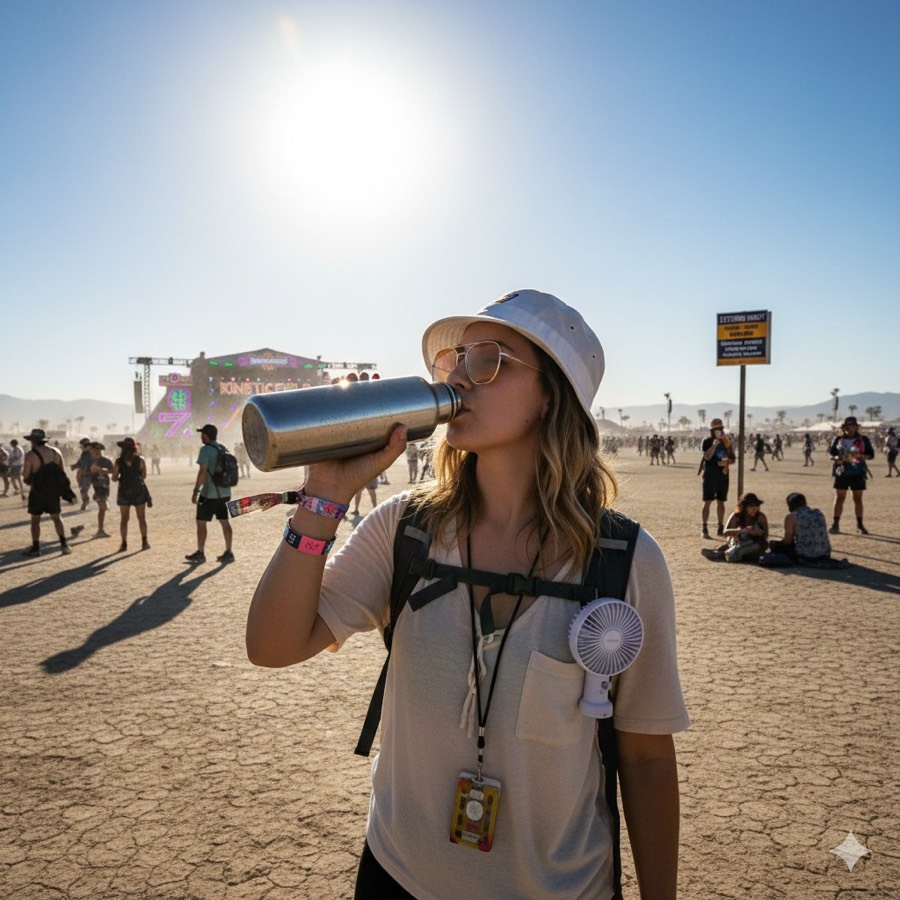
EDC temperatures regularly hit 100-110°F (38-43°C). Heat emergencies are the #1 medical issue.
Temperature by time:- 8pm: 95-100°F (35-38°C)
- Midnight: 85-90°F (29-32°C)
- 3am: 75-85°F (24-29°C)
- Hydration strategy (how much water by hour)
- Heat illness symptoms (when to get help)
- Medical tent locations (GPS coordinates)
- Cooling tactics that work
Source: NOAA data + 15 years experience
---
Music festivals are incredible experiences filled with music, community, and joy. However, like any large gathering, they come with inherent risks. Being prepared and aware can mean the difference between an amazing experience and a dangerous situation. This comprehensive safety guide covers everything you need to know to stay safe while having the time of your life.
01.Preparation and Planning
Pre-festival preparation is crucial for a safe experience. Get adequate sleep, stay hydrated, and eat nutritious meals in the weeks leading up to the festival. Share your schedule with trusted contacts, set up location sharing with friends, and program emergency contacts in your phone. Exchange numbers with your group, set meeting spots and times, and establish a communication plan if separated. Know where medical tents are located and understand festival emergency procedures. Bring backup communication methods and know festival information channels.
02.Hydration: Your #1 Priority
Dehydration is the leading cause of festival medical issues. You're dancing, walking, and exposed to heat for hours, and even mild dehydration affects judgment and physical performance. Signs include dark yellow urine, dizziness, fatigue, dry mouth, and headache. Start hydrating 2-3 days before the festival, and during the festival drink 16-32 oz of water per hour, sipping consistently rather than chugging. Add electrolyte supplements and monitor urine color (should be light yellow). Locate water stations on the map, bring a reusable water bottle, use hydration packs for convenience, and never rely on vendors for free water. Balance water intake with electrolytes to avoid hyponatremia.
03.Crowd Safety and Navigation
Crowd risks include crush injuries from dense crowds, difficulty moving or exiting, reduced personal space, and limited visibility. Stay aware of crowd density, position yourself near exits, avoid the center of massive crowds, and keep your group together. Trust your instincts—if it feels unsafe, leave. Stay toward the edges of crowds, avoid being directly in front of stages, and keep pathways to exits clear. If the crowd becomes dangerous, stay on your feet, keep arms in front of your chest, move diagonally toward edges, and protect your head and neck. Signal for help if trapped.
04.Personal Security and Boundaries
Protect valuables including phones (most commonly stolen), wallets, keys, ID, and credit cards. Use fanny packs worn in front, keep valuables in front pockets, use anti-theft backpacks, and don't flash expensive items. Use phone lanyards or cases with straps. Trust your instincts about people, don't feel obligated to interact, say no clearly if uncomfortable, and seek help if boundaries are violated. Respect others by asking before touching, respecting personal space, and not taking photos without permission. Help others if they seem uncomfortable.
05.Substance Safety and Harm Reduction
If you choose to use substances, know your limits, start with lower doses, test substances if possible (test kits available), stay hydrated, never mix substances, and have a sober friend. Watch for dangerous signs including overheating, excessive dehydration, confusion, loss of consciousness, seizures, and difficulty breathing. If you see these signs, seek medical help immediately, stay with the person, keep them cool and hydrated, and call for medical assistance. Understand local laws, know festival policies, and make informed decisions.
06.Weather Safety and Medical Preparedness
For hot weather, wear light breathable clothing, use sunscreen (SPF 30+), take breaks in shade, and monitor for heat exhaustion or heat stroke. For cold weather, layer clothing appropriately, keep extremities warm, stay dry, and seek shelter when needed. Watch for hypothermia signs. During rain and storms, have waterproof gear, avoid open areas, seek shelter, and stay away from metal structures. Know basic first aid, carry basic supplies, and understand when to seek professional help. Know medical tent locations, security locations, emergency phone numbers, and don't hesitate to seek help. Medical staff are there to help—be honest about your situation and follow medical advice.
07.Mental Health, Communication, and Group Safety
Festival stressors include large crowds, loud noises, sleep deprivation, and unfamiliar environments. Take breaks when needed, find quiet spaces, practice deep breathing, and stay connected with your group. If someone needs help, approach calmly, ask how you can help, stay with them, and get professional help if needed. Stay connected using phones, walkie-talkies, meeting spots, and information booths. Keep phones charged, use phone cases and lanyards, and back up important information. Use the buddy system—always have a buddy, check in regularly, don't leave anyone alone, and watch out for each other. Monitor each other's wellbeing, share resources, and support in difficult situations.
08.Emergency Situations and Post-Festival Recovery
For fire safety, follow festival fire rules, don't use open flames, report fire hazards, and know evacuation routes. If fire occurs, stay calm, move away from fire, and follow evacuation procedures. Understand evacuation routes, know where to assemble, and stay with your group. If separated, go to meeting spot, use phone to contact group, go to information booth, and stay calm. Post-festival, rest adequately, stay hydrated, eat nutritious foods, and monitor your health. Process your experience, stay connected with festival friends, address any concerns, and seek support if needed. Watch for persistent symptoms, mental health changes, and physical issues.
09.Conclusion
Festival safety isn't about being paranoid—it's about being prepared and aware. The vast majority of festival experiences are positive and safe, but understanding potential risks and how to handle them ensures you can fully enjoy the experience.
Remember that safety is a shared responsibility. Look out for yourself, look out for your friends, and look out for your community. The rave community is built on PLUR values—Peace, Love, Unity, and Respect—and that includes respecting each other's safety and wellbeing.
By following these safety guidelines, you're not limiting your fun—you're ensuring you can have the maximum amount of fun safely. Prepare well, stay aware, and enjoy every moment of your festival experience. The music, community, and memories await, and with proper safety awareness, you can fully immerse yourself in the experience.